
Quick answer
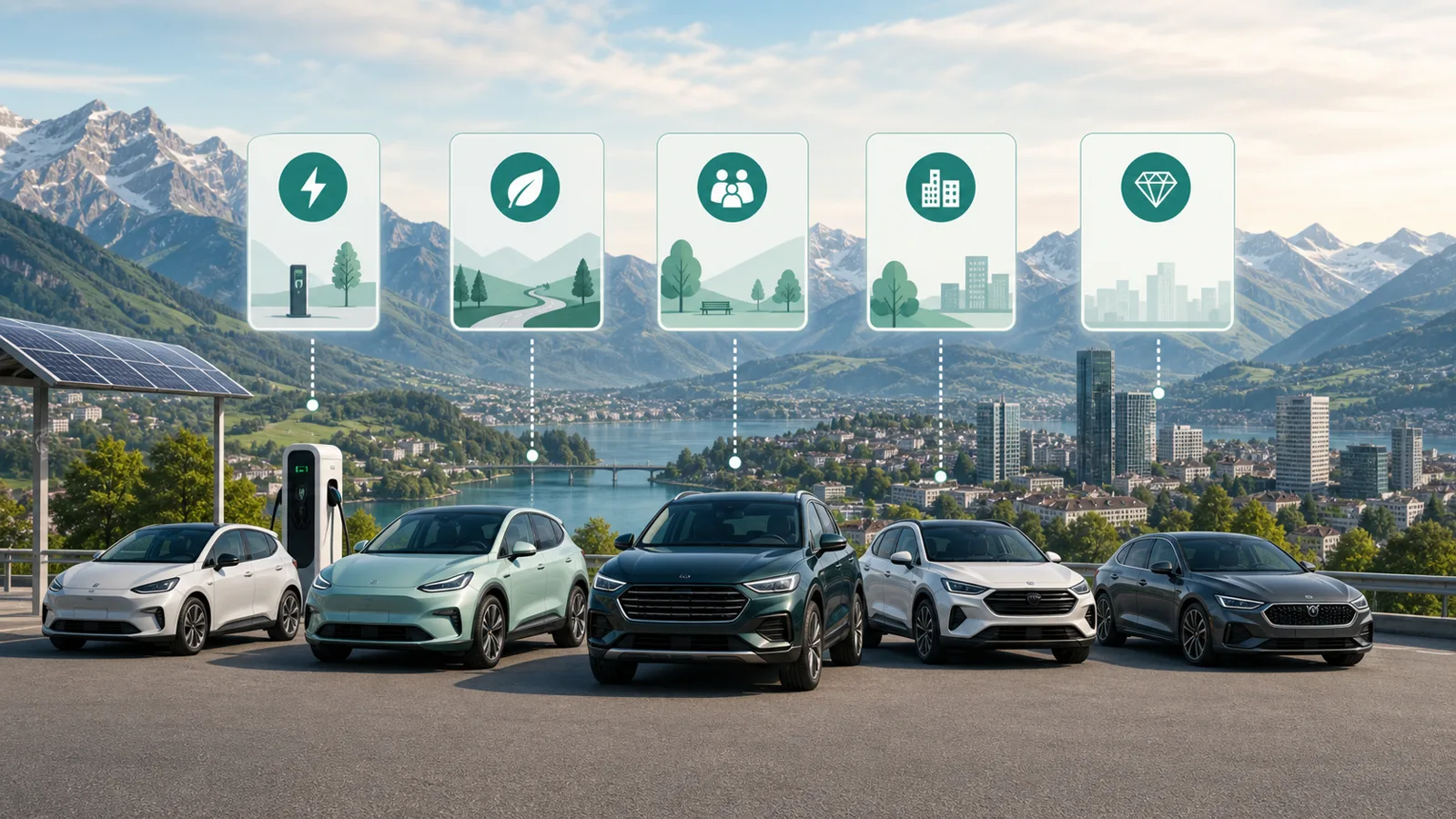
For many Swiss buyers, start with the Volkswagen Tiguan if you want a family SUV, the Tesla Model Y if you can charge reliably, the Skoda Octavia Combi if you value space without SUV bulk, the Toyota Yaris Cross Hybrid if you want low-stress daily running, and the BMW X1/iX1 if you want a premium compact SUV with an EV route.
Before buying, compare the exact version in your canton. Weight, power, CO2, engine displacement and drive type can all matter depending on where the vehicle is registered.
Shortlist by use case
Photos are representative model-family images from Wikimedia Commons, not exact Swiss Typenschein variants.

Best all-round family SUV
Volkswagen Tiguan
The Tiguan fits Swiss daily life: enough space, manageable size, useful winter options and broad service support.
- strong Swiss demand
- practical for family and daily use
- balanced space, comfort and resale appeal
Check before buying: Compare drivetrain, weight and options; a heavier SUV can cost more in tax, tyres and insurance.

Best EV all-rounder with easy charging
Tesla Model Y
Range, luggage space and a mature charging ecosystem make the Model Y a natural EV shortlist car in Switzerland.
- good long-distance usability
- large family-friendly cabin and boot
- strong market recognition as an EV
Check before buying: Check insurance, tyres, depreciation and how often you would need public charging.

Best practical estate
Skoda Octavia Combi
The Octavia Combi delivers real utility without SUV height: efficient, spacious and well suited to Swiss commuting and holidays.
- excellent luggage space
- comfortable motorway and everyday use
- often lighter and cheaper to run than large SUVs
Check before buying: If choosing a plug-in hybrid, check whether you will really drive electric kilometres regularly.

Best simple hybrid choice
Toyota Yaris Cross Hybrid
The Yaris Cross Hybrid makes sense for city, suburban and commuting use when efficiency matters but charging is not convenient.
- low everyday fuel use
- compact size for Swiss towns
- straightforward hybrid ownership
Check before buying: Test cabin space, boot size and motorway comfort against your real routine.

Best compact premium option
BMW X1 / iX1
The X1 and iX1 cover premium cabin expectations, compact-SUV practicality and an electric option without moving into large luxury-SUV size.
- premium cabin feel
- compact SUV footprint
- electric iX1 alternative
Check before buying: Options raise the price quickly; X1 and iX1 can differ meaningfully in tax and insurance.
Comparison by use case
| Use case | Shortlist | Why it makes sense | Swiss tax check |
|---|---|---|---|
| Family SUV | Volkswagen Tiguan, Skoda Kodiaq | Space, winter use, resale demand | Weight, drive type and engine |
| Electric daily driver | Tesla Model Y, BMW iX1 | Lower energy cost potential if charging is easy | Power, weight and canton EV rules |
| Long-distance estate | Skoda Octavia Combi | Efficient motorway car with real luggage space | CO2, displacement and drivetrain |
| Low-stress commuter | Toyota Yaris Cross Hybrid | Simple hybrid ownership and strong urban economy | CO2 and engine data by canton |
| Premium comfort SUV | Mercedes-Benz GLC, BMW X1 | Comfort, cabin quality and all-weather confidence | Insurance, weight, options and tyres |
Why these models were chosen
The shortlist combines Swiss demand, everyday usefulness and cost risk. Compact SUVs, estates and electrified drivetrains remain strong in Switzerland, but popularity alone is not enough.
A high-demand SUV may help resale but cost more for tyres, insurance and tax. An EV can be excellent if charging access fits your routine. A hybrid can be the calm middle ground for urban and short-distance use.
Why Swiss vehicle tax matters
Vehicle tax in Switzerland is cantonal, so the same car can be treated differently depending on where it is registered. Check the exact version, not only the model name.
EV, hybrid or combustion in 2026?
Electric and plug-in hybrid registrations continue to grow in Switzerland. The practical answer still depends on charging, routes, winter use and total ownership cost.
- Choose an EV if home, workplace or regular-route charging is realistic.
- Choose a hybrid if you want everyday efficiency without changing your charging routine.
- Choose combustion carefully if towing, rural use, budget or missing charging access makes it the better fit.
What to check before buying
- Run a canton vehicle tax estimate for the actual drivetrain and version.
- Check winter tyres, insurance, parking and service costs.
- For EVs, verify real charging access and winter range.
- For used cars, check service history, warranty, recalls and battery health.
- Use the Typenschein/type approval value to compare Swiss technical vehicle data.
FAQ
What is the best car to buy in Switzerland in 2026?
There is no single best car for every Swiss buyer. The Tiguan, Model Y, Octavia, Yaris Cross and X1/iX1 are strong starting points for different budgets, cantons and charging situations.
Should I buy an electric car in Switzerland in 2026?
An electric car is attractive if you can charge reliably and drive enough kilometres to benefit from lower energy and service costs. Compare the canton tax effect before buying.
Does vehicle tax change the best choice?
Yes. Depending on canton, weight, power, CO2, engine displacement or drive type can matter, so similar cars can have different running costs.